
Most homeowners stare at their backyard for months before doing anything.The choices appear endless, the region is too big, and it’s hard to know where to start. Our garden guide homenumental article cuts through that. Seven tips, in order, covering soil, plant selection, layout, watering, pest control, seasonal care, and the finishing touches that pull everything together.

1. What Should You Do Before You Put a Single Plant in the Ground?
A basic soil test kit runs about $15 at any garden center. It tells you your pH and nutrient levels before you spend money on plants. Most vegetables and flowering perennials want a pH between 6.0 and 7.0. Outside that range, nutrients lock up in the soil and plants can’t absorb them, no matter how well you water.
| Soil Problem | Fix | When to Do It |
| Too acidic (below 6.0) | Garden lime | 2–4 weeks before planting |
| Too alkaline (above 7.5) | Sulfur or peat moss | 2–4 weeks before planting |
| Poor drainage | Perlite or coarse sand | Before planting |
| Low nutrients | Compost or balanced fertilizer | 1 week before planting |
| Compacted clay | Till and add organic matter | 3–4 weeks before planting |
Fix the soil first. Everything else builds on it.
2. Which Plants Will Actually Survive in Your Yard using Garden Guide Homenumental?
People buy plants based on how they look at the nursery, bring them home, and watch them die. The fix is simple: check your USDA Hardiness Zone before buying anything. Use your zip code to look it up on the USDA Plant Hardiness Zone Map.
| Region | Plants That Belong There |
| Pacific Northwest (Zones 8–9) | Rhododendrons, lavender, salvia |
| Southwest (Zones 9–11) | Succulents, desert marigold, bougainvillea |
| Midwest (Zones 5–6) | Coneflowers, black-eyed Susans, hostas |
| Southeast (Zones 7–9) | Gardenias, crepe myrtles, lantana |
| Northeast (Zones 4–6) | Astilbe, peonies, ornamental grasses |
For climate-specific plant breakdowns, robert mygardenandpatio covers regional selections in a way that’s actually useful rather than generic.

3. How Do You Plan a Layout That Makes Sense Long-Term?
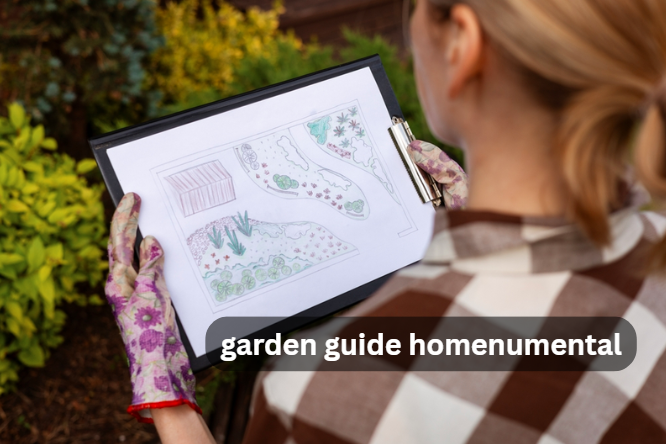
Sketch your yard before you dig. Graph paper works, or use something free like Canva. Mark sunny and shady spots that determine what goes where.
Full sun (6+ hours): vegetables, roses, most herbs Partial shade (3–6 hours): hostas, ferns, impatiens Full shade (under 3 hours): astilbe, bleeding heart, groundcovers
A few layout rules that hold up in practice:
- Tall plants should be positioned at the rear of beds to prevent shadowing shorter plants.
- Plants that need similar amounts of water should be grouped together to prevent overwatering half of the bed.
- Leave 18 inches of walking space between rows
- Define your bed edges a clean line between lawn and garden makes the whole yard look intentional
mygardenandpatio has layout guides showing how these principles work across different yard sizes.
4. Do You Water Enough or Too Much?
More plants are killed by overwatering than by underwatering. It encourages fungal decay and suffocates roots.
Including rainfall, most plants require roughly one inch of water per week. Before you water, push your finger 2 inches into the soil. Dry means water. Still moist means wait.
Drip irrigation pays off on larger gardens; it keeps foliage dry and cuts evaporation by up to 50% compared to sprinklers. Soaker hoses cost less and work nearly as well.
Water in the morning. Evening watering leaves foliage wet overnight, which is how fungal disease gets started.

5. What’s the Least Complicated Way to Handle Pests?
Chemical pesticides kill the beneficial insects (bees, ladybugs, parasitic wasps) that naturally keep pest populations down. Wipe those out and you create a bigger problem.
A practical approach for most home gardens:
- Check plants weekly. Early detection means less damage.
- Pick off larger pests by hand. Hornworms and beetles respond to this. Unpleasant but effective.
- Use neem oil for soft-bodied pests. Aphids, whiteflies, spider mites. Apply in the early morning or evening.
- Try companion planting. Basil near tomatoes deters thrips. Marigolds along the perimeter push back on nematodes.
- Put out a shallow water dish. It draws birds and beneficial insects that handle a lot of pest control on their own.
For pairing pest management with raised bed builds, home upgrading advice mintpalment covers structural upgrades that reduce ground-level pest access.
6. How Do You Keep the Garden in Good Shape All Year?
The gardens that look best in July get attention in fall and winter too, not just spring.
| Season | What to Focus On |
| Spring | Soil prep, cool-season planting, pruning dead growth |
| Summer | Watering, deadheading, harvesting, pest checks |
| Fall | Dividing perennials, planting bulbs, adding compost |
| Winter | Ordering seeds, planning changes, mulching tender plants |
Two inches of shredded bark or straw in fall insulates roots, holds spring moisture, and cuts weeding significantly. Skip rubber mulch near edible plants.
home upgrades mintpalment covers seasonal prep in the context of larger outdoor improvement projects.
7. What Design Details Actually Change How a Garden Feels?
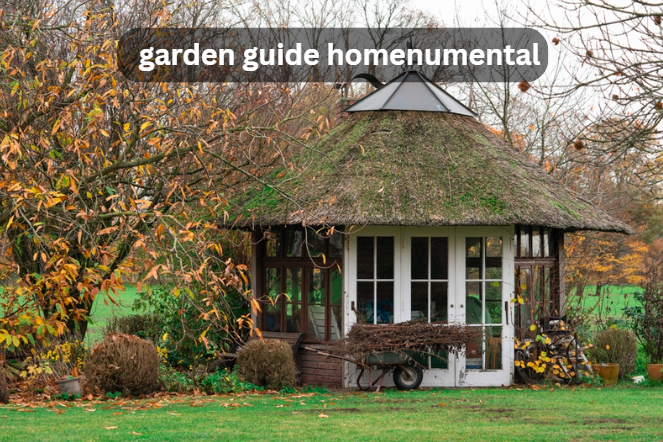
The plants are only part of it. The space around them determines whether people actually use it by garden guide homenumental.
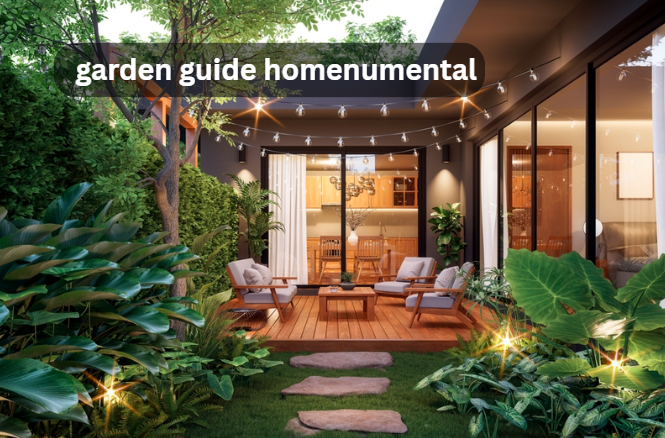
- Path lighting. Solar stake lights ($30–$60 a set) change how the garden reads after dark.
- Defined edging. Metal or stone between beds and lawn takes an afternoon and makes the yard look finished.
- One focal point. A birdbath, statement shrub, or simple sculpture gives the eye somewhere to land.
- Seating near something fragrant. Lavender, jasmine, or roses near a bench is the detail visitors notice.
If the garden is part of a bigger renovation, do hardscaping first (patios, paths, raised beds), then soil prep, then planting. Going backward means digging things up twice.
For full project planning, how to design home renovation homenumental and how to start home renovations homenumental are good places to map out scope before anything breaks ground.
Frequently Asked Questions
What does a garden guide homenumental approach mean? It treats outdoor spaces with the same planning discipline as an interior renovation: assess first, fix fundamentals, then build outward.
How frequently should I apply fertiliser? Most gardens do well twice a year, in early spring and midsummer. Slow-release granular is low-maintenance; liquid fertilizer acts faster when plants look stressed.
What’s the easiest vegetable for US beginners? Zucchini, cherry tomatoes, and green beans. All three tolerate inconsistent watering and produce results quickly.
How do I tell if a spot gets enough sun? Check every two hours from 8am to 6pm. Under 3 hours it is in full shade. 3 to 6 is partial. Over 6 is full sun.
Does garden advice apply to container gardens? Yes, garden advice homenumental with Same principles: right soil, right light, consistent watering. Containers dry out faster, so you water more often.
Why do plants keep dying despite good care? Soil pH and drainage are the most common hidden causes. Test your soil before assuming the issue is your watering routine.
Final Thoughts
A good garden isn’t built in a weekend, but it also doesn’t require years of trial and error if you start with the right foundation. Soil first, then the right plants for your zone, then a layout that works with your light conditions. Watering, pest management, and seasonal habits keep it going. Design details make it worth spending time in.
Following our garden guide homenumental approach means you’re not guessing. You’re working a system that holds up season after season. For anyone combining garden projects with bigger home upgrades, home upgrading mintpalment is worth a look alongside these tips.
Read more visit our website https://robertmygardenandpatio.com/