
A strong foundation is not just about holding a structure upright. It is about managing soil behavior, moisture movement, and long term load transfer in a way that remains reliable for decades. As construction methods evolve and building sites become more challenging, helical piles have emerged as a practical and proven foundation solution for residential and light commercial projects.
This article explores how helical piles work, where they add the most value, and why they are increasingly specified in modern foundation design. The goal is not to sell a system, but to explain how this technology fits into a broader approach to building durable foundations.
Understanding the Role of Foundations in Building Performance
Foundations serve two primary functions. They distribute structural loads safely into the ground, and they protect the building envelope from soil movement and moisture related stress. When either function is compromised, problems follow. These can include cracking, settlement, misaligned framing, and water intrusion.
Moisture and soil conditions are especially interconnected. Poor drainage or fluctuating groundwater can weaken bearing soils, while settlement can open pathways for water to reach basement walls. This is why foundation planning is often aligned with drainage strategies and long-term basement waterproofing solutions. Addressing load support and moisture control together reduces the risk of future repairs and structural instability.
What Are Helical Piles
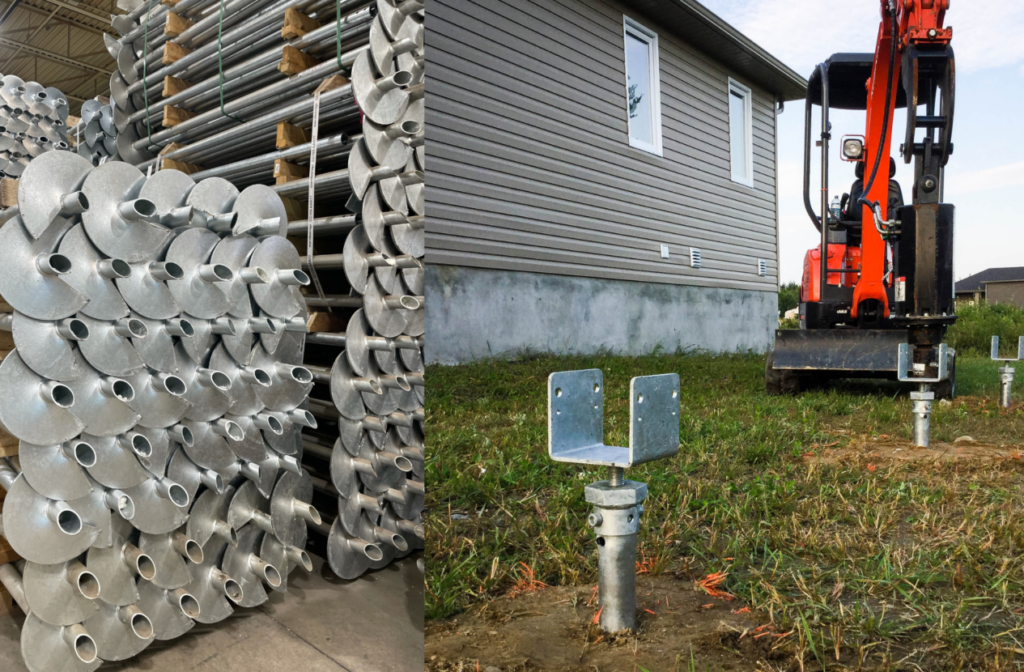
Helical piles are deep foundation elements consisting of a steel shaft with one or more helical plates welded near the tip. These plates resemble large screws and allow the pile to be rotated into the ground rather than driven or excavated.
As the pile advances, the helices engage with load bearing soil layers below weak or unstable surface soils. Once installed to the required depth and torque, the pile provides immediate load capacity. There is no curing time, no concrete spoil, and minimal disturbance to surrounding soil.
Why Helical Piles Are Used in Modern Foundations
Helical piles solve several challenges that traditional foundations struggle with.
First, they bypass poor surface soils. Clay, fill, organic material, and frost susceptible soils are common causes of settlement. Helical piles transfer loads below these layers to more competent strata.
Second, installation is precise and verifiable. Installation torque correlates directly with load capacity. This allows installers and engineers to confirm performance during installation rather than relying solely on assumptions.
Third, they are adaptable. Helical piles can be installed in confined spaces, close to existing structures, and in conditions where excavation would be impractical or risky.
Applications Where Helical Piles Excel
New Construction on Challenging Sites
When building on sloped lots, variable soils, or previously disturbed ground, shallow foundations often require extensive soil replacement or over excavation. Helical piles reduce or eliminate these steps. They allow designers to achieve required load capacities without reengineering the entire site.
Foundation Underpinning and Structural Repair
Helical piles are widely used to stabilize and lift settled foundations. By installing piles adjacent to existing footings and transferring the load, further settlement can be halted. In some cases, minor elevation recovery is possible depending on structural conditions.
Additions and Load Increases
When an existing structure is expanded or modified, original foundations may not be designed for the new loads. Helical piles can be installed to support additions independently, reducing stress on older footings.
Decks, Porches, and Light Structures
For smaller structures, helical piles offer a fast and clean alternative to concrete piers. They are especially useful in areas with high groundwater or limited access.
Installation Process and Engineering Considerations
A successful helical pile foundation begins with proper evaluation. Soil conditions, design loads, and installation constraints all influence pile selection and layout.
Installation typically follows these steps:
- Site assessment and pile design based on load requirements
- Positioning and alignment of piles according to engineered drawings
- Rotational installation using hydraulic equipment
- Monitoring and recording installation torque
- Load transfer to the structure through brackets or caps
Because piles achieve capacity through soil engagement rather than end bearing alone, depth is determined by soil resistance, not a preset measurement. This adaptability is one of the system’s strengths.
Performance in Relation to Moisture and Soil Movement
Soil movement is often driven by changes in moisture content. Expansive clays swell when wet and shrink when dry. Freeze thaw cycles further complicate the picture.
Helical piles mitigate these effects by anchoring below the active soil zone. This reduces seasonal movement and helps maintain consistent structural support. When combined with proper grading, drainage, and waterproofing, the result is a more stable and resilient foundation system.
Industry data indicates that soil related movement remains one of the leading causes of foundation distress, particularly in residential construction. Deep foundation systems like helical piles directly address this root cause rather than treating symptoms after the fact.
Environmental and Construction Efficiency Benefits
From a construction standpoint, helical piles offer several advantages:
- Minimal excavation reduces site disruption
- No concrete curing allows immediate loading
- Reduced material waste and spoil removal
- Lower noise and vibration compared to driven piles
These benefits are particularly valuable in urban or occupied sites where access and disturbance must be controlled.
Design Integration and Long Term Planning
Helical piles are not a standalone solution. They perform best when integrated into a comprehensive foundation strategy. This includes:
- Proper structural detailing at pile connections
- Coordinated drainage and waterproofing systems
- Consideration of lateral loads and uplift where applicable
- Ongoing monitoring in critical applications
When used thoughtfully, helical piles become part of a layered defense against settlement, moisture intrusion, and structural degradation.
Common Misconceptions About Helical Piles
One common misconception is that helical piles are only for repairs. In reality, their use in new construction continues to grow as engineers recognize their predictability and efficiency.
Another misconception is cost. While the upfront cost may be higher than basic shallow foundations in ideal soil conditions, the long term value often offsets this. Reduced risk of settlement, fewer repairs, and faster construction timelines all contribute to overall project economy.
Building Foundations for the Long Term
Foundation failures rarely happen overnight. They develop gradually as soil conditions, moisture, and loads interact over time. Choosing foundation systems that address these variables at their source is key to long term performance.
Helical piles offer a practical and adaptable solution for modern building challenges. By transferring loads to stable soil, minimizing disturbance, and integrating well with moisture management strategies, they support foundations that are built to last.
For builders, designers, and property owners alike, understanding how and when to use helical piles is an important step toward creating structures that remain stable, dry, and reliable for decades to come.