
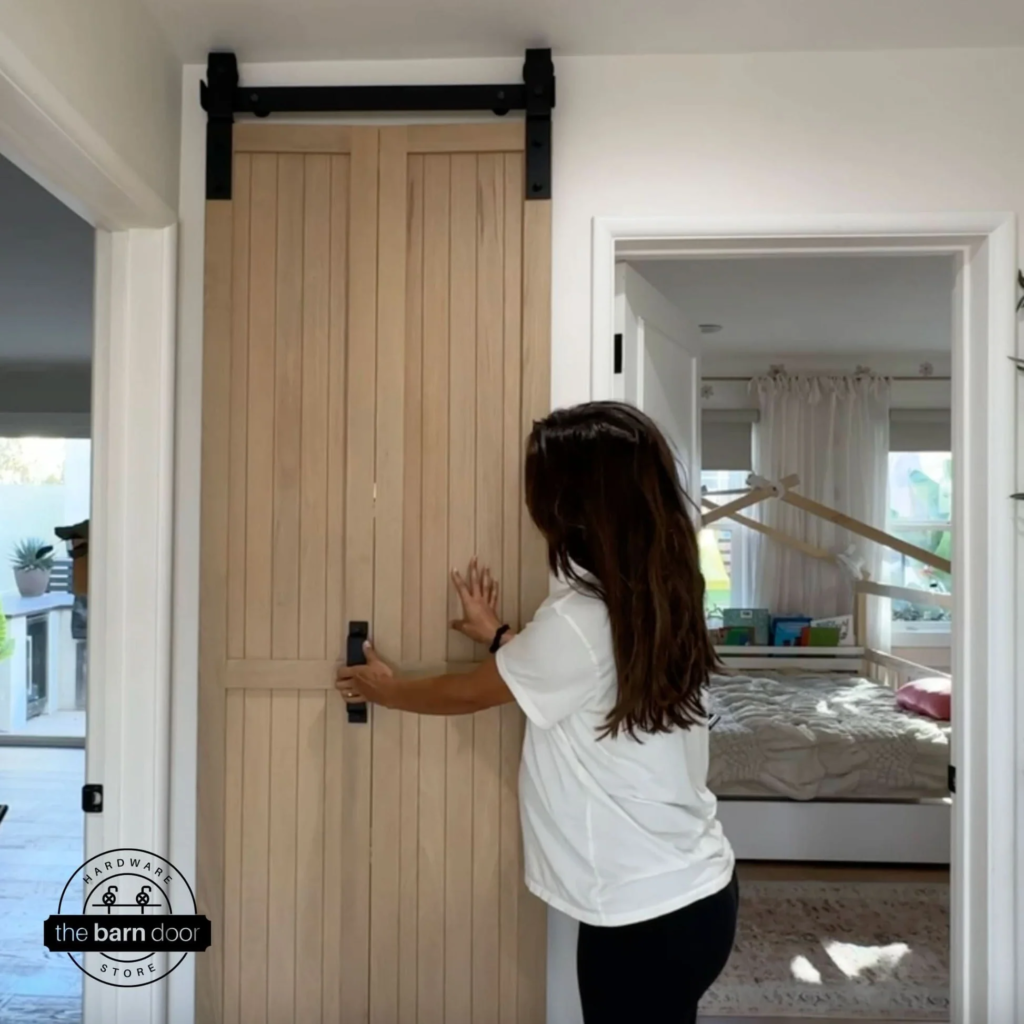
Barn doors had their big moment, then quietly grew up. What started as a bold design statement has evolved into a genuinely practical solution for modern homes—especially where space is tight and flexibility matters. Somewhere along that evolution, bifold barn doors entered the conversation and made homeowners pause.
They look good. They promise space savings. They feel a bit smarter than traditional swinging doors. But are they actually worth the investment?
Like most home upgrades, the answer depends less on trends and more on how you live. Let’s take a clear, honest look at cost, durability, and style to see whether bifold barn doors earn their place—or just photograph well on Pinterest.
What Bifold Barn Doors Actually Are
A Hybrid With a Purpose
Bifold barn doors combine two familiar ideas: the folding function of a bifold door and the surface-mounted hardware style of a barn door. Instead of one large panel sliding across a wall, multiple panels fold neatly to one side.
This design solves a very specific problem—limited wall space.
In homes where a traditional barn door would block switches, artwork, or furniture, bifold barn doors offer the same visual appeal with a much smaller footprint.
The Cost: More Nuanced Than You’d Expect
Not the Cheapest, Not the Most Expensive
Bifold barn doors typically cost more than standard interior doors and basic bifold closets—but less than many custom sliding systems.
Your total cost depends on:
- Door material (solid wood, engineered wood, composite)
- Hardware quality
- Number of panels
- Installation complexity
The doors themselves are only part of the equation. Hardware quality plays a huge role, especially since bifold systems rely on precise alignment and smooth movement.
Cutting corners on hardware is one of the fastest ways to turn a promising upgrade into a daily annoyance.
Installation Costs Can Vary Widely
Simpler Than You Think—If Planned Properly
Compared to pocket doors or custom sliders, bifold barn doors are relatively straightforward to install. There’s no need to open walls or relocate framing.
That said, professional installation may still be worth it if:
- The opening isn’t perfectly level
- The doors are heavy
- You want seamless alignment
Poor installation affects performance more than design. Even the best doors will misbehave if installed incorrectly.
Durability: Built to Fold, Not Fight Gravity
Quality Hardware Makes the Difference
Durability is where bifold barn doors quietly shine—when done right.
Unlike traditional barn doors that hang the full weight on a single panel, bifold systems distribute weight across multiple panels and pivots. This can actually reduce stress on hardware when properly designed.
However, durability depends heavily on:
- Roller and pivot quality
- Track strength
- Door weight rating
Cheap systems wear quickly. Quality systems operate smoothly for years with minimal adjustment. The difference isn’t subtle once you’ve lived with both.
Daily Use: How They Actually Feel to Live With
Convenience You Notice (In a Good Way)
Bifold barn doors are surprisingly easy to use. They open with less effort than large single-panel sliders and don’t require as much clearance.
This makes them ideal for:
- Closets
- Laundry rooms
- Pantries
- Small offices
- Bathrooms (with proper privacy considerations)
They also stay out of the way once open, which is something traditional barn doors can’t always claim.
Noise and Movement Matter More Than Style
Quiet Doors Are Happy Doors
A well-designed bifold system operates quietly. Poorly designed ones announce themselves every time you open them.
Noise usually comes from:
- Low-quality rollers
- Loose pivots
- Misaligned tracks
This is where spending slightly more upfront pays off daily. Quiet movement doesn’t just feel better—it signals that components are wearing evenly.
Style: More Versatile Than Traditional Barn Doors
Less “Farm,” More Flexibility
Traditional barn doors lean rustic by default. Bifold barn doors, on the other hand, adapt easily to different styles.
They work well in:
- Modern interiors
- Transitional homes
- Minimalist spaces
- Updated traditional layouts
Because the panels are smaller, designs feel lighter and less visually dominant. This makes bifold barn doors easier to integrate without overwhelming a room.
Customisation Options Are a Big Plus
Panels, Finishes, and Layouts
One of the underrated benefits of bifold barn doors is design flexibility.
You can choose:
- Panel styles (flat, shaker, glass-insert)
- Finishes to match trim or furniture
- Hardware that blends in or stands out
This flexibility allows the doors to complement the room rather than becoming the focal point—unless you want them to be.
Space Savings Are Where They Truly Win
Especially in Tight Layouts
In smaller homes or awkward floor plans, space matters. Traditional swing doors need clearance. Standard barn doors need wall space.
Bifold barn doors need neither in large amounts.
They’re particularly effective where:
- Wall space is limited
- Furniture placement matters
- Doorways sit near corners
This makes them a practical solution, not just a design choice.
Maintenance Is Refreshingly Minimal
No Special Rituals Required
Good bifold systems don’t require much upkeep. Occasional cleaning and a quick check of alignment usually suffice.
What they don’t need:
- Regular lubrication
- Constant adjustment
- Specialized tools
If a system requires frequent tweaking, that’s a quality issue—not normal behaviour.
Potential Drawbacks to Consider
No Door Is Perfect
Bifold barn doors aren’t ideal for every situation.
They may not be the best choice if:
- Maximum soundproofing is required
- The opening is very wide
- The design aesthetic is strictly traditional
They also require precise installation to function correctly. Rushing this step often leads to frustration later.
Are They Worth It Long-Term?
Value Depends on Fit, Not Hype
When bifold barn doors match the space and lifestyle, they offer excellent long-term value. They solve real problems, age well stylistically, and function reliably when quality materials are used.
When chosen purely for trend appeal without considering layout or usage, they can feel unnecessary.
Worth comes from alignment—not popularity.
So, are bifold barn doors worth it?
If you need space efficiency, want design flexibility, and value smooth daily use, the answer is often yes. They offer a smart middle ground between traditional doors and sliding systems, with fewer compromises than most people expect.
They’re not the cheapest option, but they’re rarely the most expensive. They’re durable when built properly. And stylistically, they’ve proven far more adaptable than their rustic roots suggest.
When chosen thoughtfully and installed well, bifold barn doors don’t just look good—they quietly improve how a space works.
And that’s usually the best kind of upgrade.