
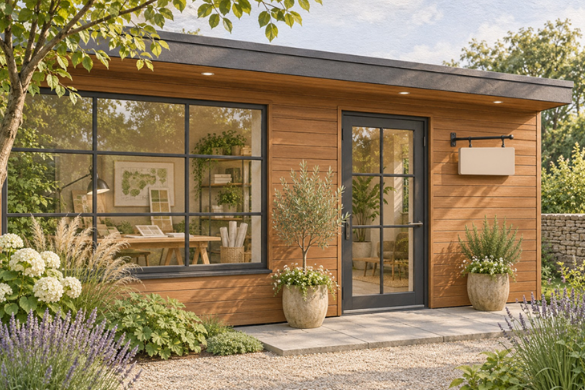
A garden design studio can show a client something before the first drawing is opened. The route to the door, the planting beside it and the way materials meet all give a sense of how the business works. That opportunity is valuable, but it can also tempt a designer to squeeze too many examples into one small site.
Good garden design studio exterior ideas keep the place coherent. Visitors should experience a garden that works, rather than a collection of competing demonstrations. Choose a clear direction, resolve the ordinary needs and let a few well-considered details speak for the approach. The exterior still has to support a working business on an unremarkable Tuesday.
Decide what the garden should explain
Choose the main idea you want visitors to understand. It could be a practical approach to small spaces, careful material combinations or planting that suits the site. That direction helps you edit the design instead of adding every feature that might appeal to a future client.
The garden doesn’t have to represent every style in the portfolio. Photographs and drawings can show that range. The physical space needs to feel complete on its own, with a sensible relationship between the building, the routes and the planting.
Keep the idea specific enough to guide decisions. If the aim is easy everyday use, show that through comfortable movement and manageable care. If the focus is material detail, give people room to see the relevant junctions. A clear example is more useful than several ideas that haven’t been fully resolved.
Let the approach demonstrate good planning
Clients should be able to find the studio without needing an explanation at every turn. Look at the journey from their perspective, including the gate, the place they pause and the door they are expected to use.
Test arrival instructions with someone unfamiliar with the property. Notice where they hesitate or choose a different route. Include ordinary belongings in the exercise. A visitor carrying a bag or closing an umbrella will tell you more about the entrance than someone walking through an empty space on a dry day.
Keep deliveries and service access in the plan. Large samples need a route, and packaging needs somewhere to go. If those needs are ignored, the exterior will be rearranged around them later, often in ways that undermine the careful layout clients were meant to experience.
Give planting a considered backdrop
The studio wall can support the garden without demanding all the attention. Think about its colour and texture alongside the plants, paving and door frames. A quiet finish can give a varied planting scheme room to breathe; a stronger surface may suit a simpler composition.
NeoTimber’s composite cladding provides options to compare when a composite exterior suits the project. Look at samples outdoors with the other materials, and discuss the complete wall assembly with an appropriate professional. Corners, openings and finishing details affect the final appearance as much as the broad wall surface.
Address the building’s condition and moisture-management needs before choosing the decorative finish. Keep access to ventilation and inspection points. A studio exterior is a more useful demonstration when its construction and maintenance have received the same care as its colour palette.
Show details people can understand
One clear transition between a path and a planting bed can explain more than a wall full of loose samples. Let clients see why the detail helps: perhaps it gives the edge a deliberate line or makes a maintenance task easier.
Keep separate samples available for closer comparison during an appointment. Organise them so you can retrieve the relevant choices without searching through mixed boxes. Explain that the right material depends on the client’s site, budget and use; the studio’s own solution is an example rather than a universal answer.
Give the displays enough space to be understood. A crowded collection can make it harder for a visitor to notice what matters. If something doesn’t contribute to the garden or the consultation, consider whether it belongs in storage until it is needed.
Choose planting you can care for honestly
The garden has its own light, soil and exposure, regardless of the image the business would like to project. Work with those conditions. Consider mature plant sizes and what the garden will look like through the quieter parts of the year.
Keep maintenance access practical, particularly around the building and narrow boundaries. A scheme requiring an intense tidy before every visit creates a misleading picture of its ordinary life. Let the garden demonstrate a level of care that the business can realistically maintain.
That opens a useful conversation with clients. You can explain the work associated with particular choices and show how the layout makes it manageable. Avoid describing a planted space as maintenance-free. Specific, honest explanations about care are more helpful than a broad promise that the garden will look after itself.
Make the business easy to identify
A studio sharing a property with a home needs an entrance people can recognise. The branding should help a client confirm they have arrived, while remaining appropriate to the setting. It doesn’t need to occupy every view of the garden.
For professionally produced signage, Alpen Signs is a supplier to consider during the arrival planning. Begin with the information and viewing position. A readable name at the right point may be more effective than a larger sign placed where people see it only after they have found the door.
Check relevant permissions and restrictions before installation. Keep the wording concise and judge it from the actual approach. The sign should fit the studio’s character while doing the straightforward job of helping a first-time visitor feel expected.
About NeoTimber
NeoTimber offers cladding alongside decking, fencing, balustrades and outdoor furniture. Its cladding resources include samples and installation information that can support the comparison of finishes and the discussion of a complete exterior project.
For a garden design studio, use those resources in relation to the building and surrounding landscape. Review the details with the installer and retain the care information once the work is complete. Samples can also help explain material choices during consultations, provided the discussion remains clear about the specific product, setting and requirements being considered.
Keep the exterior a working garden
Give outdoor consultations a comfortable place where appropriate. A useful seat and a surface for a drawing may be enough. Consider shade and wind before making that area permanent, and keep it connected to the main route.
Photograph the garden through the seasons so clients can see how it develops. Keep built work, proposed ideas and supplier references clearly distinguished. Obtain appropriate permission before showing other people’s projects or information.
Review the exterior as the business changes. Remove features that no longer contribute instead of allowing the garden to become an archive of past experiments. When visitors can find the entrance, move comfortably and understand the planting and materials, the space provides a convincing introduction to the studio through the experience of using it.Read more at https://robertmygardenandpatio.com/.