
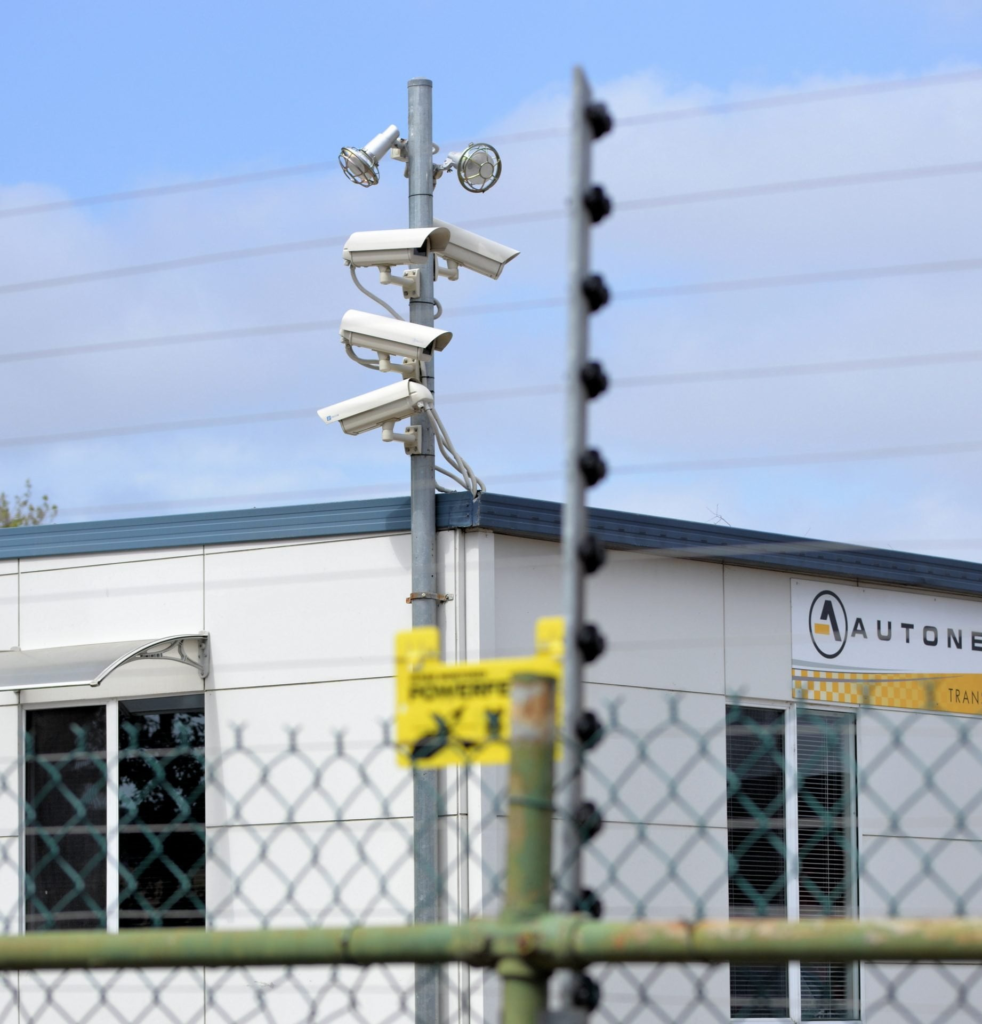
When homeowners plan improvements, they often focus on visible upgrades such as landscaping, fencing, lighting, driveways, gates, patios, garages, and smart home devices. These projects can improve comfort, property value, and appearance. However, one important area is often considered too late: perimeter security.
Perimeter security should be part of home improvement planning from the beginning, especially for large homes, villas, farms, private estates, vacation houses, and properties with wide outdoor areas. A well-planned security layout can help protect the home before an intruder reaches doors, windows, vehicles, or family living spaces.
Security Starts at the Boundary
Many homeowners think security begins at the front door. In reality, better protection starts at the property boundary. Fences, gates, walls, hedges, and driveways are the first physical lines that define private space. If these areas are not properly protected, intruders may enter the yard before any alarm is triggered.
Including perimeter protection in a home improvement plan allows homeowners to design security together with the property layout. For example, a new fence can be planned with sensor cable routes, camera positions, lighting points, and gate access control. This is much easier than adding security equipment after construction is finished.
Better Planning Reduces Blind Spots
Every property has weak points. These may include side gates, garden paths, low walls, dark corners, remote sheds, garage entrances, and back fences. During a home improvement project, homeowners can review the whole property and identify these risk areas.
Security planning can help answer important questions:
Where could someone climb over the fence?
Which areas are hidden from street view?
Where should lights and cameras be installed?
Are there trees, walls, or buildings blocking visibility?
Does the driveway need stronger access control?
By considering these questions early, homeowners can reduce blind spots and build a more complete protection system.
Fences and Gates Need More Than Appearance
A new fence or gate is often chosen based on design, material, and cost. While appearance matters, security performance is also important. A beautiful fence may not provide enough protection if it is easy to climb, cut, or bypass.
Homeowners should consider fence height, material strength, anti-climb design, gate locks, access control, and sensor compatibility. For larger properties, a perimeter intrusion detection system can add an active security layer by detecting suspicious activity along the boundary.
This means the fence is not only a physical barrier. It also becomes part of an early-warning system.
Early Warning Is More Valuable Than Late Response
Door and window alarms usually detect intrusion after someone reaches the house. Perimeter detection can provide earlier warning by identifying activity at the outer boundary. This gives homeowners, guards, or monitoring teams more time to respond.
Early warning is especially valuable for homes with large gardens, long driveways, detached garages, warehouses, barns, or outdoor storage areas. It can help detect climbing, cutting, digging, or unusual vibration near the protected line before the intruder gets close to the building.
This type of protection is not only about stopping crime. It also helps improve response time and reduce uncertainty.
Fiber Optic Sensing for Larger Residential Properties
For large private properties, farms, estates, and high-end residential communities, fiber optic sensing can be a practical perimeter security technology. A DAS fiber optic sensor uses optical fiber to monitor vibration and acoustic activity along a fence, wall, or buried route.
When someone climbs a fence, cuts a barrier, walks near a sensitive boundary, or creates strong ground vibration, the system can detect signal changes. It can also help locate the event along the protected perimeter, allowing faster and more targeted response.
Fiber optic sensing is suitable for long-distance outdoor monitoring because the fiber cable can cover extended boundaries with fewer powered devices along the perimeter. It is also resistant to electromagnetic interference, which is useful for properties with electrical systems, gates, pumps, solar equipment, or outdoor machinery.
Integration with Smart Home Systems
Modern home improvement often includes smart locks, cameras, lighting, sensors, and mobile alerts. Perimeter security can work together with these systems.
For example, when a perimeter alarm is triggered, the system can activate nearby lights, turn cameras toward the alarm zone, send a mobile notification, or alert security personnel. This creates a layered security system instead of relying on only one device.
Cameras are useful for visual confirmation, but they work best when paired with reliable detection. Without detection, cameras may only record what happened. With perimeter sensing, cameras can be used more actively to verify an event in real time.
Lower Long-Term Installation Costs
Adding perimeter security during a home improvement project can reduce future installation costs. Cable routes, conduit, control cabinets, power supply, network connections, and equipment positions can be planned before landscaping, paving, or wall construction is completed.
If security is added later, installers may need to dig up finished ground, modify fences, open walls, or reroute cables. This can increase cost and damage completed work.
Early planning also helps avoid poor equipment placement. Security devices should be installed where they can perform well, not simply where installation is easiest after the project is finished.
Improving Property Value and Peace of Mind
Home improvement is not only about appearance. It is also about comfort, safety, and long-term property value. A home with well-planned security can be more attractive to buyers, especially in areas where privacy and protection are important.
For homeowners, the biggest benefit is peace of mind. Knowing that the property boundary is monitored helps families feel safer, especially at night, during travel, or when the house is located in a remote area.
Conclusion
Perimeter security should not be an afterthought in home improvement planning. It should be considered together with fencing, gates, lighting, landscaping, cameras, and smart home systems.
By planning early, homeowners can reduce blind spots, improve response time, protect outdoor areas, and lower future installation costs. For larger properties, advanced technologies such as fiber optic sensing can provide continuous boundary monitoring and reliable early warning.
A strong home improvement plan should make the property more beautiful, more functional, and more secure from the outside in.
Read more at https://robertmygardenandpatio.com/