
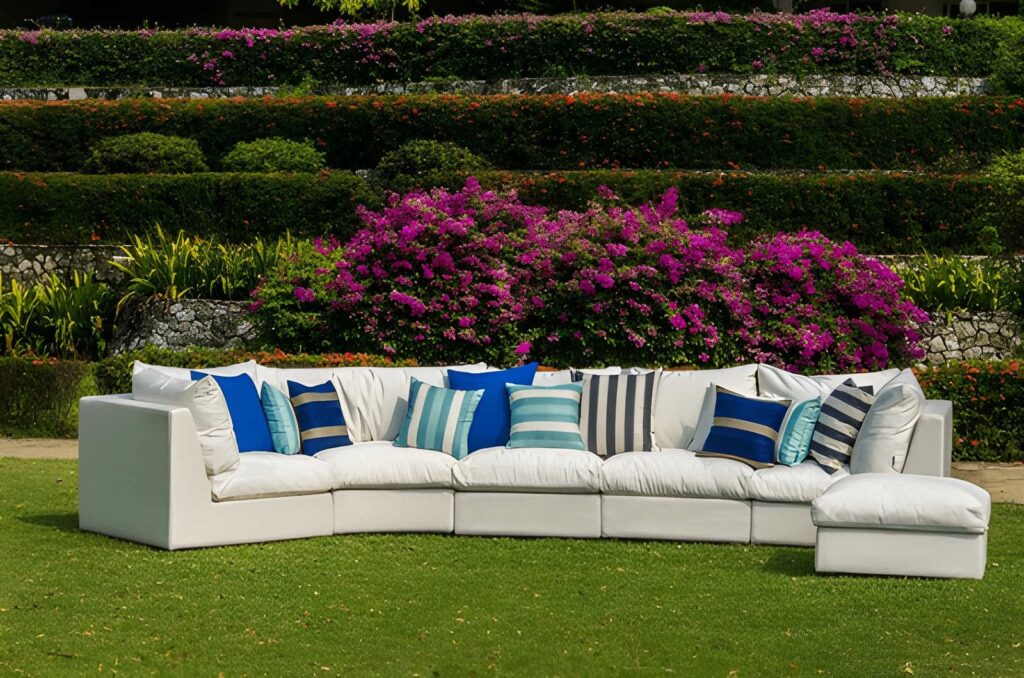
If you have a sunroom filled with Lloyd Flanders furniture, you already know the value of investing in beautiful, well-made pieces. But even the most durable furniture eventually needs a cushion refresh. Finding the right Lloyd Flanders replacement cushions for a sunroom is a little different from shopping for standard outdoor patio cushions, and getting it right means understanding your specific environment before you order.
Here is what you need to know before you replace those cushions.
Key Takeaways
- Sunrooms create unique conditions, including UV exposure through glass, humidity fluctuations, and temperature swings, that affect which cushion materials will hold up best.
- Lloyd Flanders furniture has proprietary frame dimensions, which means standard off-the-shelf cushions rarely fit correctly.
- High-quality foam and performance fabrics are the two most important investments when replacing sunroom cushions.
- Replacing only the cover without addressing worn foam is a short-term fix that often leads to disappointment.
- Fabric fade resistance is just as important indoors near glass as it is on an open patio.
- Ordering fabric swatches before committing helps you match your existing sunroom palette with confidence.
Why Sunrooms Are Harder on Cushions Than You Might Think
It is easy to assume that because your wicker furniture lives inside, your cushions are fully protected from the elements. In many ways, that is true. But a sunroom creates its own set of challenges that can shorten the life of your cushions faster than you expect.
Sunlight through glass is intense. Standard window glass filters some UV rays, but not all. In fact, according to the Skin Cancer Foundation, most standard glass blocks UVB rays but allows up to 75% of UVA rays to pass through. Those same rays that affect your skin affect your fabric, causing fading, weakening fibers, and degrading foam over time.
Temperature swings take a toll. Sunrooms heat up significantly in summer and can get surprisingly cool in winter, especially if they are not fully climate-controlled. Those repeated cycles of expansion and contraction cause foam to break down faster than it would in a stable interior environment.
Humidity is a real factor. Sunrooms near kitchens, pools, or humid climates can trap moisture, creating ideal conditions for mildew to form inside cushion foam, especially foam that has already begun to compress and lose its structure.
None of this means your sunroom furniture cannot look and feel beautiful for years. It just means that when it is time to replace your cushions, the choices you make about fabric, foam density, and construction really matter.
The Fit Problem: Why Lloyd Flanders Cushions Are Not One-Size-Fits-All
Lloyd Flanders is known for its quality wicker and rattan construction, and the furniture is designed with specific proportions that standard replacement cushions simply do not account for. Seat depths, back angles, and arm heights vary by collection, and a cushion that is even an inch too wide or too short will look off and feel worse.
This is one of the most common frustrations among Lloyd Flanders owners who try to save money with a generic replacement. The cushion arrives, it does not sit flush, it bunches at the corners, or it slips because the ties are in the wrong position. The result is a furniture set that looks worse, not better.
Custom-fit or brand-specific replacement cushions are designed with those frame dimensions in mind, so the seat cushion lays flat, the back cushion supports you at the right height, and the whole piece looks intentional. For a sunroom that you have invested in, that fit really makes a difference.
According to a survey by the American Home Furnishings Alliance, ill-fitting cushions are among the top three complaints homeowners report after purchasing replacement outdoor or sunroom cushions, ranking alongside fading and foam flattening. Getting the dimensions right before you order is the single most effective way to avoid that frustration.
Foam Matters More Than You Think
If your current cushions feel flat, collapsed, or lumpy, the problem is almost always the foam, not the fabric. And this is where a lot of homeowners make a well-intentioned but ultimately disappointing decision: they replace just the cover.
New fabric on old, worn foam will still feel flat. The foam has lost its resilience, and no amount of pretty fabric changes that. On top of the comfort issue, worn foam tends to be misshapen, which means it no longer provides an accurate template for a properly fitting cover. You end up with a cover that wrinkles, shifts, or puckers in ways that a new cover over healthy foam simply would not.
When replacing sunroom cushions, foam density is worth discussing with your supplier. Higher-density foam holds its shape longer, especially in environments with temperature fluctuations. It also tends to feel more supportive and luxurious, which makes a real difference when you are spending long afternoon hours in your sunroom.
Choosing the Right Fabric for a Sunroom Setting
Fabric selection for sunroom cushions follows many of the same principles as outdoor fabric selection, because the conditions, particularly UV exposure, are more similar than most people expect.
Performance fabrics are worth the investment. Fabrics like Sunbrella are solution-dyed, meaning the color goes all the way through the fiber rather than sitting on the surface. That process makes them significantly more fade-resistant than standard decorative fabrics. For a sunroom where afternoon sun streams in through large glass panels, that resistance to fading can extend the life of your cushions by years.
Moisture resistance still matters. Even in an enclosed sunroom, fabrics that resist mildew are a smart choice. If your sunroom ever gets humid, you will be glad you chose a fabric designed to handle it.
Pattern and color are a real consideration. One of the advantages of a sunroom setting is that you have more design flexibility than an open patio, where weather conditions often narrow your choices. Sunrooms are natural extensions of interior design, so your cushion fabric can and should reflect your interior palette. Deeper colors, layered patterns, and coordinating accent pieces all work well in a sunroom setting.
If you are unsure which fabric direction to go, ordering swatches first is always the right move. Seeing a fabric in your actual sunroom light, next to your existing pieces, takes the guesswork out of a decision you will be living with for years.
When to Replace vs. When to Wait
Not every tired-looking sunroom cushion needs immediate replacement. Here are a few honest benchmarks to help you decide where your cushions stand.
Replace sooner if:
- The foam noticeably collapses when you sit down and does not spring back
- The fabric has visible fading, fraying, or mildew staining that cleaning cannot fully resolve
- The cushions have shifted shape and no longer sit flush against the frame
- You feel the furniture frame through the seat cushion
It may be worth waiting if:
- The fabric is in good condition and the foam still has reasonable resilience
- You are planning a larger sunroom refresh and want to coordinate everything at once
- You are still in the process of selecting fabric or sourcing swatches
There is no shame in getting the most life out of what you have. But when the foam is truly gone, waiting longer only means more time spent in a space that does not feel as welcoming as it could.
A Few Practical Tips Before You Order
Measure carefully, and then measure again. Note the seat width, seat depth, back height, and whether the back cushion is attached or loose. If you can, photograph the frame without cushions so you can reference the exact shape when discussing options with a supplier.
Check the tie placement. Lloyd Flanders frames often have specific attachment points, and cushion ties need to align with those points for the cushion to sit correctly. If you are ordering from a supplier who specializes in brand-specific cushions, they should be able to guide you on this.
Think about the full set. Even if only one or two cushions are truly worn out, replacing mismatched pieces can be tricky. If the rest of your set is not far behind, it may be worth replacing everything at once so your fabric and foam age together evenly.
Do not rush the fabric decision. A few extra days waiting on swatches is far better than receiving cushions in a color or texture that does not look the way you imagined.
Your Sunroom Deserves Better Than “Close Enough”
Lloyd Flanders furniture is built to last. The frames, the wicker, the construction, all of it is made with longevity in mind. The cushions are the one element that eventually wears out, and when they do, replacing them well is the smartest way to protect the investment you already made in your furniture.
Approaching the process thoughtfully, understanding your sunroom’s specific conditions, choosing the right foam density and fabric, and getting the dimensions right, means you end up with cushions that look beautiful, feel genuinely comfortable, and hold up the way you need them to.
Your sunroom is your space. It deserves cushions that actually fit.